Hearing aid advice
Do I need one hearing aid or two?
Find out why both ears matter and what an audiologist considers when recommending one device or a pair. Ask about a hearing test in West Bromwich at no cost to you.
Why both ears matter when fitting hearing aids
How your two ears work together
Your brain relies on input from both ears to make sense of sound. When signals arrive from the left and right at slightly different times, you can tell where a noise is coming from. This ability matters when you cross a road, follow someone walking beside you, or pick out a voice in a busy room.
Losing that balance changes how you experience everyday life. Sound feels flat. Conversations demand more concentration because your brain has to work harder with incomplete information. Fatigue after a long day often starts here, not from physical effort but from the strain of listening with only partial input.
A single ear also struggles to filter background noise. In a cafe or a crowded kitchen, two ears help separate speech from clatter. With just one working fully, everything blends together and voices become harder to catch.
What happens when loss affects both sides
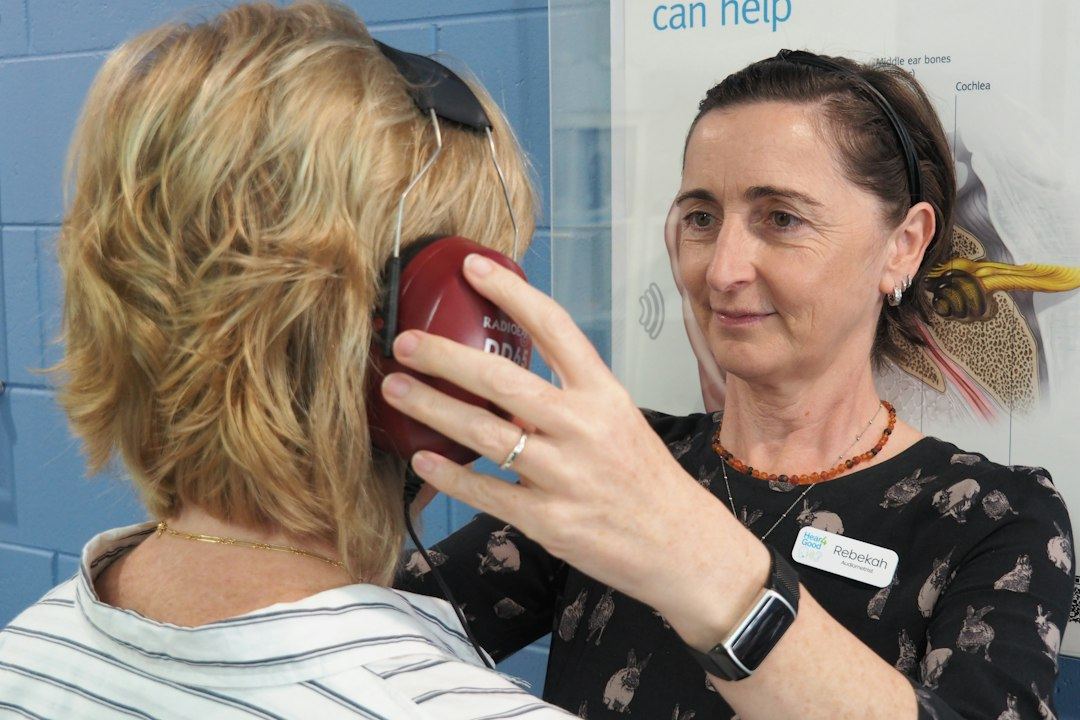
Hearing loss rarely affects both ears equally, but it often touches them both. An audiologist will run a hearing test that measures each ear separately. The results show whether the drop in hearing is similar on both sides or worse in one.
When both ears have measurable loss, fitting only one hearing aid leaves the other side unaided. That unaided ear continues to send weak signals to the brain. Over time, the brain may start to rely less on that input, making the imbalance harder to correct later.
Fitting two devices keeps both pathways active. Each hearing aid amplifies sound for its own ear, so the brain receives balanced input again. People fitted on both sides typically report that speech sounds clearer and they feel less tired by the evening. The specialist carrying out the fitting uses the test results to set each device independently.
Reasons an audiologist might recommend just one
There are situations where a single hearing aid makes more sense. If hearing loss sits entirely in one ear and the other functions normally, there is no reason to fit two. The good ear does not need amplification, and adding a device would distort natural sound.
Sometimes the degree of loss differs so much between the two ears that fitting the poorer one offers little benefit. Severe damage in one ear might mean a hearing aid cannot process sound clearly enough to help, regardless of power settings.
Budget plays a part too. Two devices cost more than one, and an audiologist will discuss what is realistic. But if both ears have loss that a hearing aid can address, the recommendation usually leans toward a pair. A hearing test clarifies which scenario applies to you.
Getting used to wearing two devices
Adjusting to one hearing aid takes patience. Adjusting to two takes a little more, because your brain is relearning how to process a full stereo picture of sound. At first, noises might seem louder than expected or oddly spaced.
The specialist who fits the devices will programme them gradually. Starting at a lower volume and increasing it over several weeks gives your brain time to adapt without feeling overwhelmed. You will likely notice improvements in stages: first, general awareness of sounds returns, then speech becomes easier to follow, and finally background noise settles into place.
Wearing both devices consistently during waking hours speeds up this process. Taking one out because it feels uncomfortable defeats the purpose of balancing the input. If something feels wrong, the audiologist can adjust the settings rather than leaving a device in a drawer.
Find out what your hearing needs
Send an enquiry about a hearing test. An audiologist in West Bromwich will review your details and arrange an appointment. There is no obligation to proceed further.
- No obligation to buy
- Local audiologists
- Free initial enquiry